8th-18th Feb, 2026
Sea Signals
Ōtautahi
Street Art
Festival
Icy Platelets
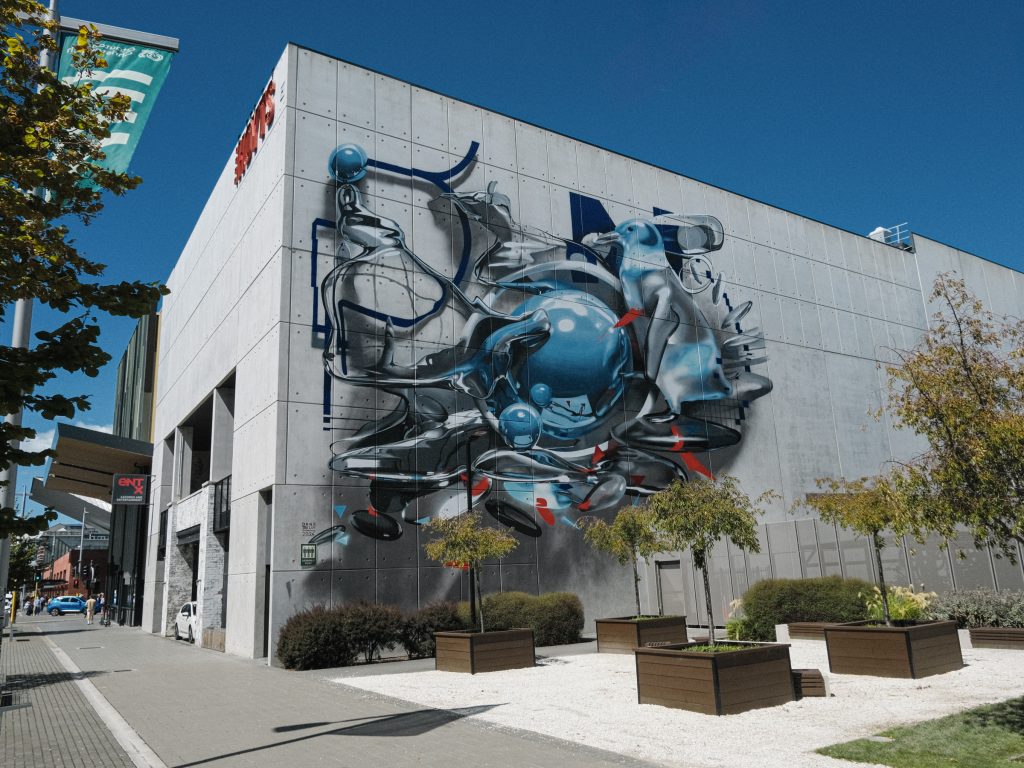
This mural is a result of an interdisciplinary exchange of environmental scientist Elizabeth Skelton (Christchurch) and the German multimedia artist Bond Truluv.
“A reduction in sea ice formation has been observed across Antarctica each year since 2016, compared with historic averages. These changes have been observed locally in McMurdo Sound; four of the past seven years have seen southerly storm events resulting in delayed landfast sea ice formation over the winter months. Attached below the consolidated fast ice, the sub-ice platelet layer (SIPL) is a crystallized and porous layer of ice situated between the ocean and floating sea ice, found in the vicinity of ice shelves. SIPLs play a critical role in the rapidly changing ecosystem within McMurdo Sound and the Southern Ocean.”
Skelton, Elizabeth
Bond Truluv interpreted these research results in his own visual way. The melting look aims to symbolize a changing environment, in which ice plays a major role and is depicted in a watery manner. Circular elements represent the food chain and the lonely penguin made of glass represents critical changes for the food chain (small red triangles) of a larger group of local predators.This mural is augmented reality (AR) animated.
Please scan the QR code and allow camera usage in order to view it.
Echoes from the deep
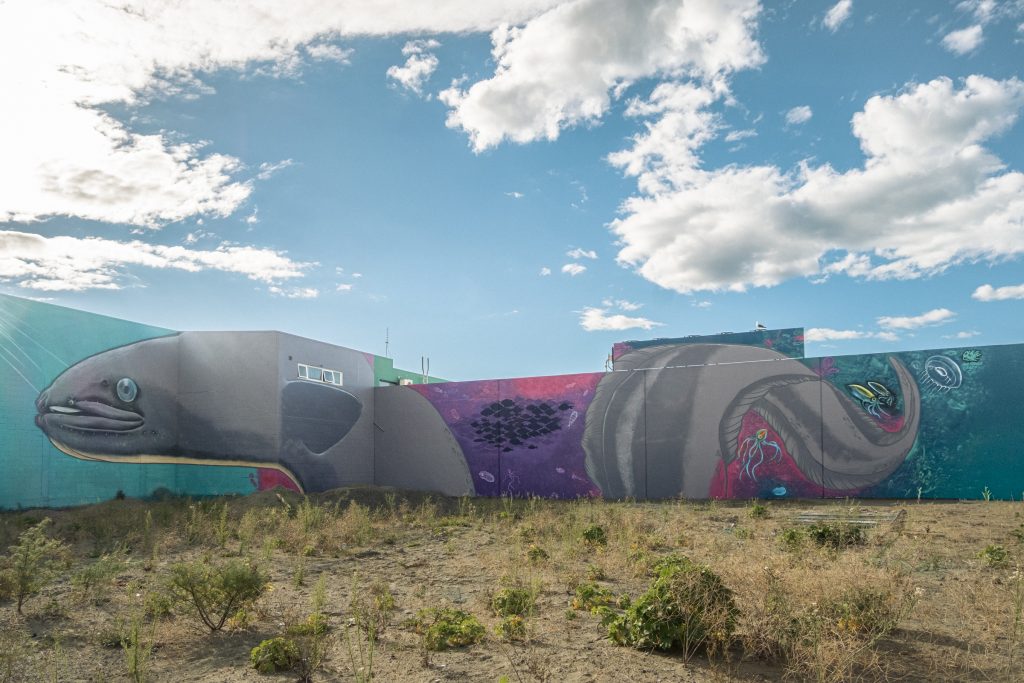
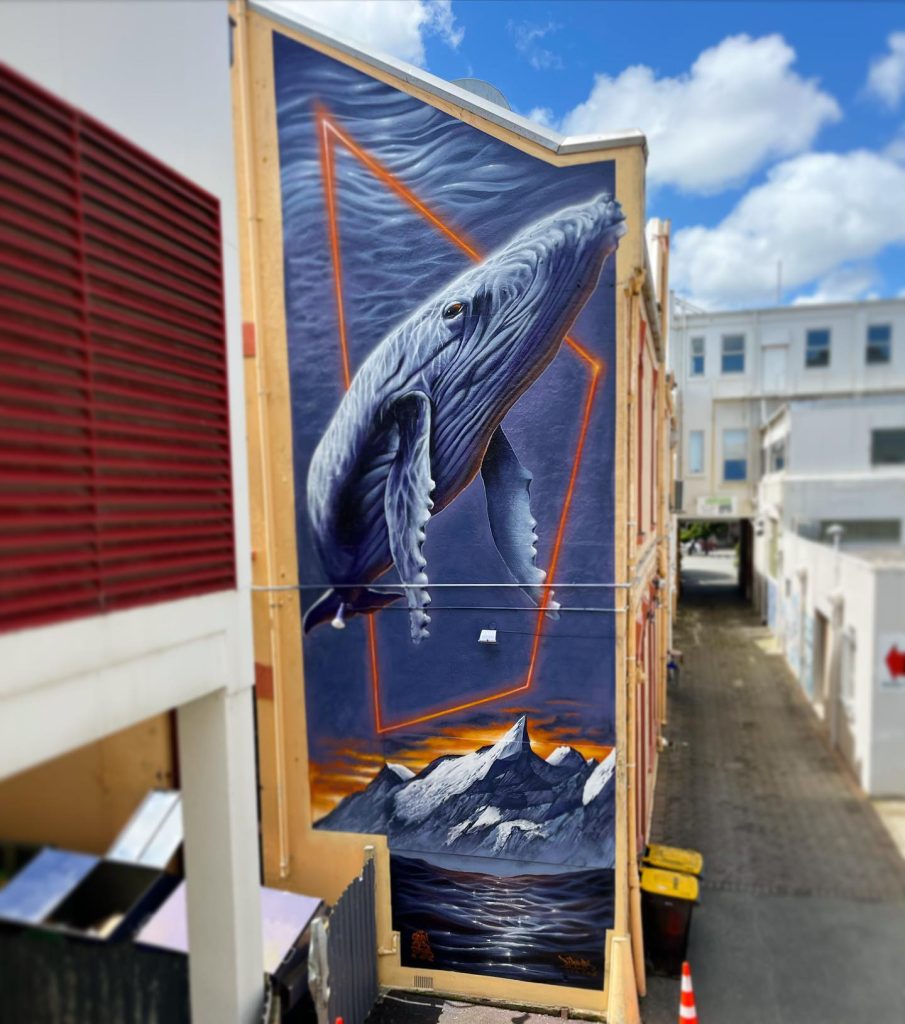
This mural tells the story of the longfin tuna (eel) of Aotearoa and its extraordinary final migration. After spending most of its life in freshwater rivers, lakes, and wetlands, the tuna begins a remarkable journey at the end of its life, travelling thousands of kilometres into the Pacific Ocean. Guided by ancient instinct, it descends into the mesopelagic “twilight zone,” where sunlight fades and darkness begins, eventually reaching its deep-ocean breeding grounds near where it was once born.
In this work, Chileone depicts the tuna mid-migration, gliding through this mysterious ocean space. The tuna turns its head back toward the surface, acknowledging the human world above. This gesture is intentional, it serves as a reminder that we are connected to these hidden journeys and share responsibility for their survival.
The mural reflects the deep relationship between land, freshwater, and ocean, highlighting that all waterways are linked. What enters our streets, drains, rivers, and wetlands ultimately flows to the sea. By caring for freshwater environments, we protect not only this ancient taonga species, but also the wider ecosystems that depend on clean, living waters.
Through this work, Chileone invites viewers to reflect on connection, guardianship, and the unseen life cycles that rely on our collective care.
Mesopelagic
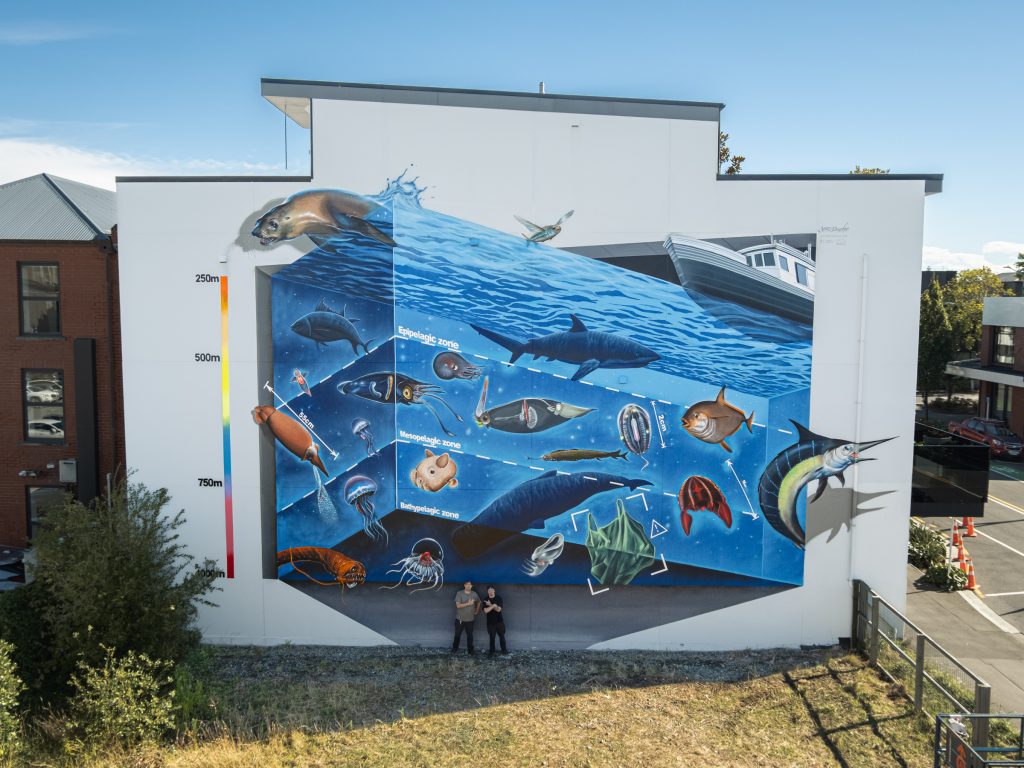
This mural spotlights the ocean’s mesopelagic zone, also known as the “twilight zone.” Extending from 200 to 1,000 meters deep, this high-pressure layer features faint sunlight and dramatic temperature shifts. Created with Earth and Marine scientist , Joyce Yager, the artwork serves as a scientific infographic to raise awareness. It includes the epipelagic and bathypelagic zones, showcasing the immense variety of life within each layer, complete with dimensions to illustrate the vastness of the deep ocean.
‘The Diver’s’
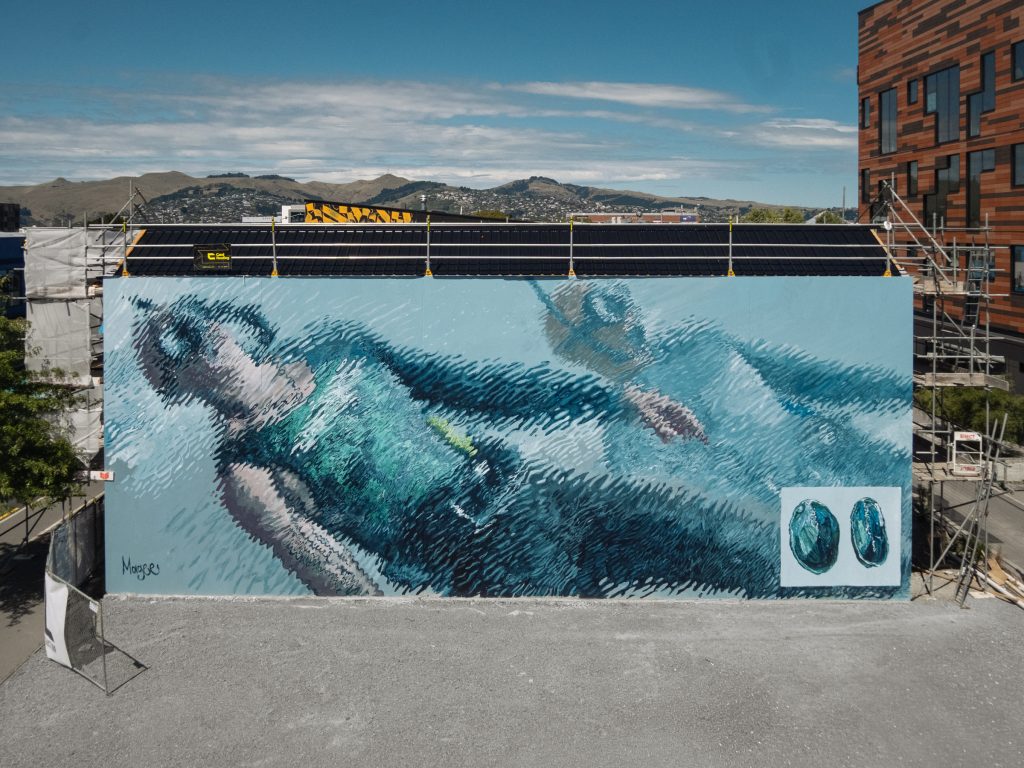
This work explores the Practice of Free diving on the South Island of New Zealand and its impact on sustainable fishing. The 7.8 magnitude Kaikōura earthquake on November 14, 2016, caused significant damage to the pāua (New Zealand abalone) fishery along the northeast coast of the South Island, resulting in the uplifting of the seabed by up to 2 meters in some areas. This abrupt, large-scale upheaval left thousands of pāua exposed and stranded high and dry, causing severe, immediate damage to their habitat and population.
Since the earthquake ‘Freedive’ fishing only has been introduced and the only way to catch Paua is by taking a breath and diving, retrieving the shells one dive at a time. This traditional Maori diving technique provides a natural barrier to overfishing and has kept the Paua population at sustainable levels since the earthquake.
The work explores the roles of traditional hunting practice as a barrier to overfishing and ocean sustainability, something that applies to many coastal communities around the globe.
ACID SEAS
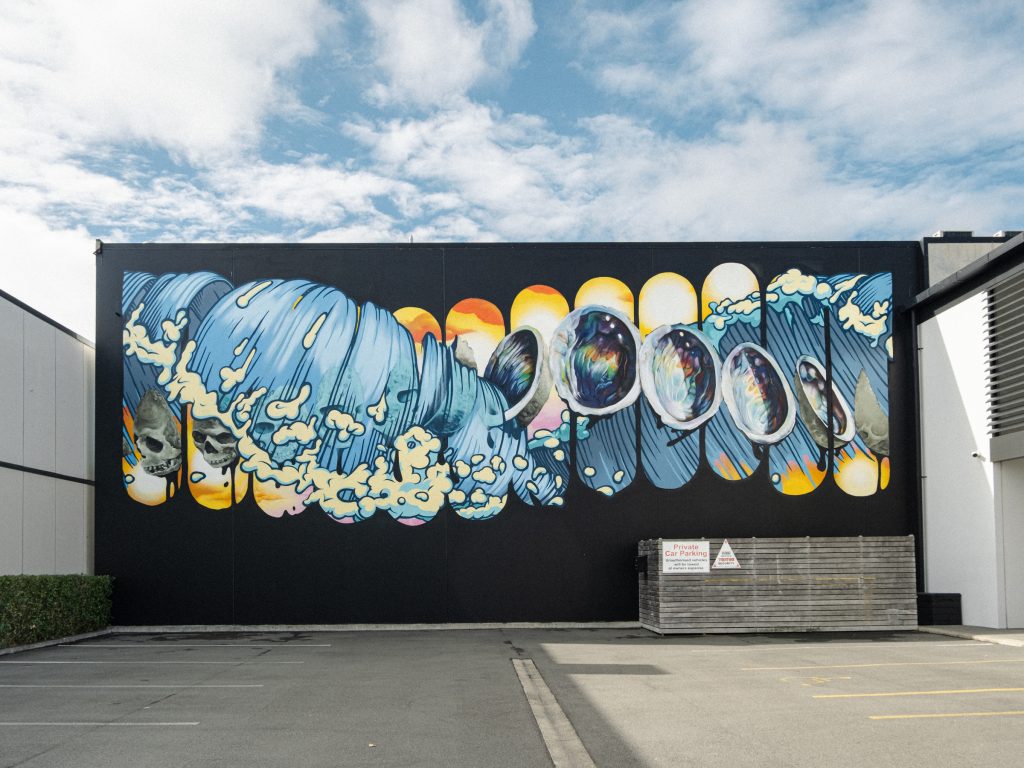
The science at the core of this painting is ocean acidification — a direct result of rising atmospheric CO₂ levels being absorbed by the sea. As the ocean takes in more carbon dioxide, its chemistry changes, becoming more acidic. This shift makes it increasingly difficult for shellfish — a crucial food source for both marine ecosystems and human communities — to form and maintain their shells.
To ground this mural in Aotearoa, I chose the pāua shell as the central feature of the work. Pāua is not only one of the most beautiful shells in the world, with its iridescent layers of colour, but it also holds deep cultural significance within Māori traditions, where it has been used for generations in carving and adornment.
I approach mural projects as opportunities to learn as much as to create. The strongest message I took from this experience was the importance of listening to Indigenous voices, especially in conversations about environmental stewardship. Their knowledge, values, and long-standing relationship with the natural world are essential if we are to respond meaningfully to the climate crisis.
This mural is augmented reality (AR) animated.
Please download app and allow camera usage in order to view it.
Sanctuary
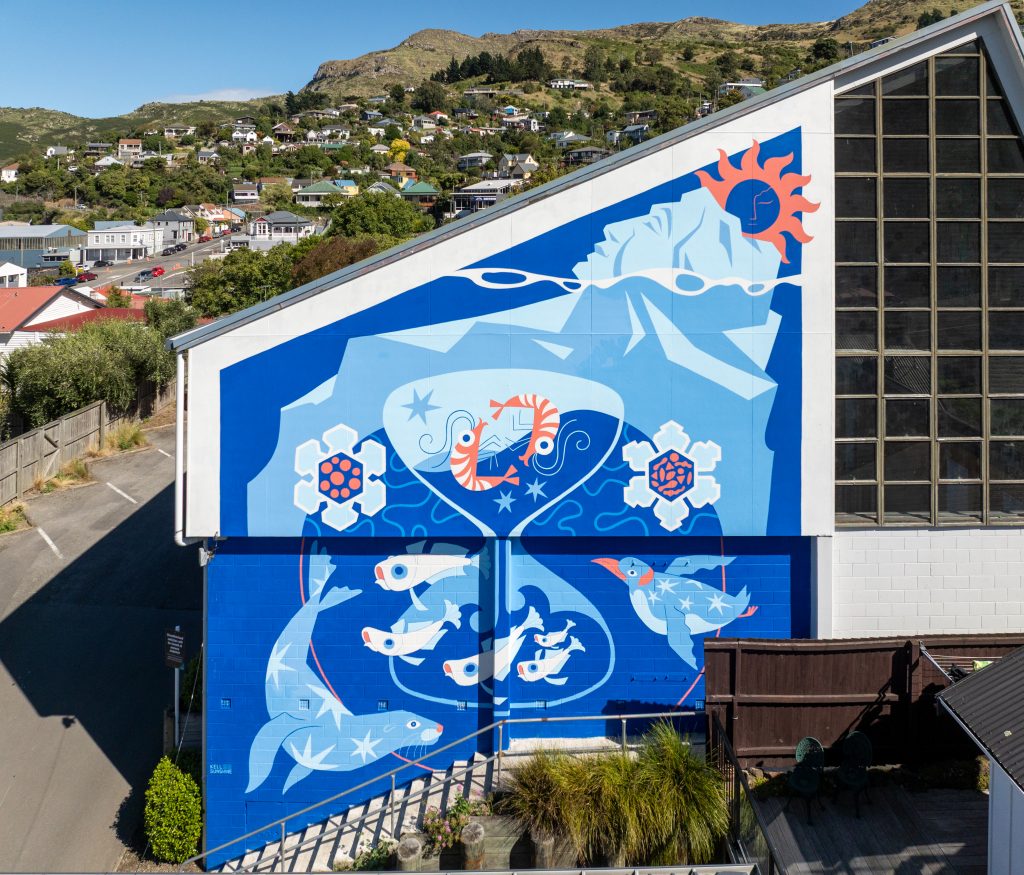
This design imagines the Antarctic sub-ice world as a living system, guided by a maternal ice figure who forms the uppermost layer, her presence calm and watchful, backed by the sun who’s gently filtered light makes all life below possible. At the centre, an hourglass device marks the passage of time: a reminder that the sub-ice platelet layer is both dynamic and fragile, and that what happens here is precious. In its upper chamber, krill drift among light and shelter; below, Antarctic silverfish gather in the colder depths, while predators circle outside the glass, held at bay by the ice’s protection.
Symmetrically placed ice-crystal forms in the upper section glow with microalgae, bacteria, and protozoans – the invisible engines of the ecosystem. These primary producers and recyclers fuel an entire food web that cascades downward through zooplankton, fish, seals, and birds. The vertical hierarchy of the mural mirrors this structure, showing how energy, protection, and dependence shift from top to bottom within the sub-ice platelet layer. Together, the imagery tells a quiet but urgent story: if time runs out for this hidden layer, the balance sustaining Antarctic life begins to fall away.
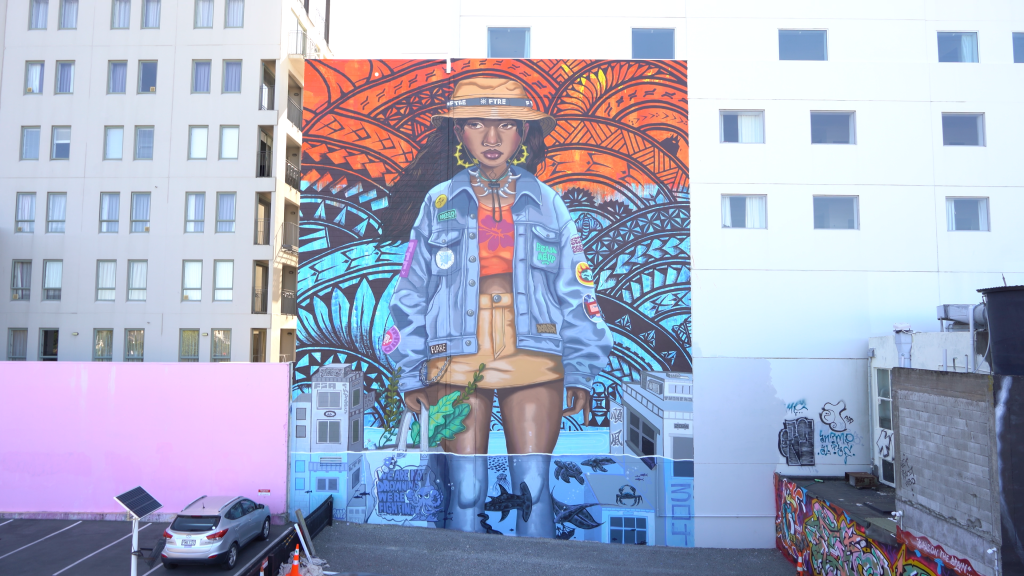
Oku tangi mahi ‘a e tahi (The Ocean Is Crying)
This mural explores how rising seas and groundwater will reshape Canterbury in the coming decades, linking local climate impacts in Christchurch with the lived realities of Pacific Island nations. The central figure wades through water that feels both familiar and global, blending coastal flooding with the oceanic environments of the Pacific, where climate change is already devastating communities.
The figure is an everyday young person, carrying groceries and moving through ordinary life. This reflects how climate change is not a distant future problem, but something that is already making daily activities harder. Shopping for food, finding housing, staying dry, feeling secure. These basic parts of life are becoming more uncertain. The work asks: what kind of future are young people being left with?
The tote bag reads “We are not drowning, we are fighting,” referencing the Pacific Climate Warriors ethos. This challenges the common narrative that portrays Pacific communities only as victims. Instead, it centres their resistance, leadership, and strength. While Christchurch faces rising groundwater, erosion, and flooding, island nations such as Tuvalu are already losing ancestral land. What is coming for Aotearoa has been happening to the Pacific for years.
The mural reflects how climate impacts are deeply interconnected. Moana connects us all. What happens in one place affects another. Environmental damage, food scarcity, migration, economic pressure, and political instability are not separate issues. Climate change will increase displacement and inequality, intensify competition for resources, and create conditions where fear, racism, and authoritarian politics can grow.
It critiques world leaders and governments who continue to delay, deflect responsibility, and protect corporate interests while communities bear the consequences. Across the world, governments are failing to meet climate targets, weakening environmental protections, and allowing major polluters to operate with little real accountability. There are few consequences for inaction, broken promises, or environmental destruction. Those most responsible are rarely the ones who pay the price.
Representation is central to the work. Seeing brown bodies in colonial urban spaces is powerful. Growing up here , this was something I rarely saw. Yet these communities are among the most at risk. Placing a Pacific presence in Christchurch’s landscape challenges who is seen as belonging and who is heard in conversations about climate.
Art can translate complex scientific data into something people can feel. Rising groundwater, sea-level projections, and erosion maps can feel abstract. Through visual storytelling, these realities become human, emotional, and immediate. The mural aims to spark conversation, create discomfort, and build awareness beyond academic or policy spaces.
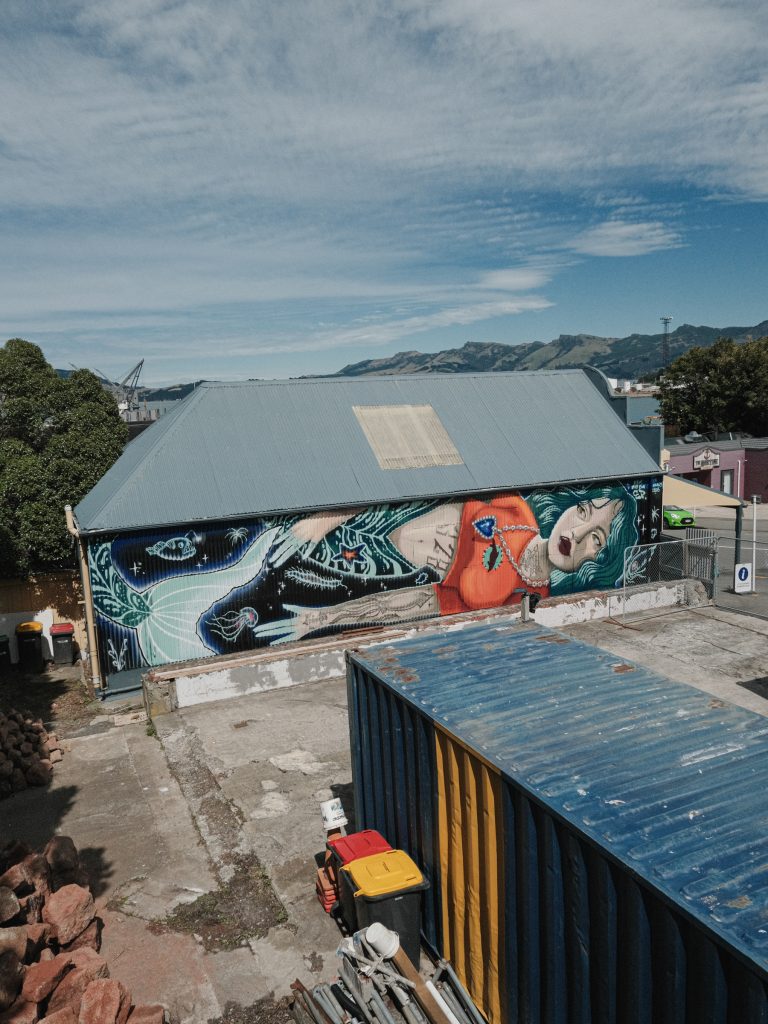
Deep Sea Escape
Inspired by research into the Mesopelagic — or “Twilight” — zone (200–1,000 metres below the ocean’s surface), this mural draws from a realm of rare beauty, where bioluminescent creatures glow in near darkness.
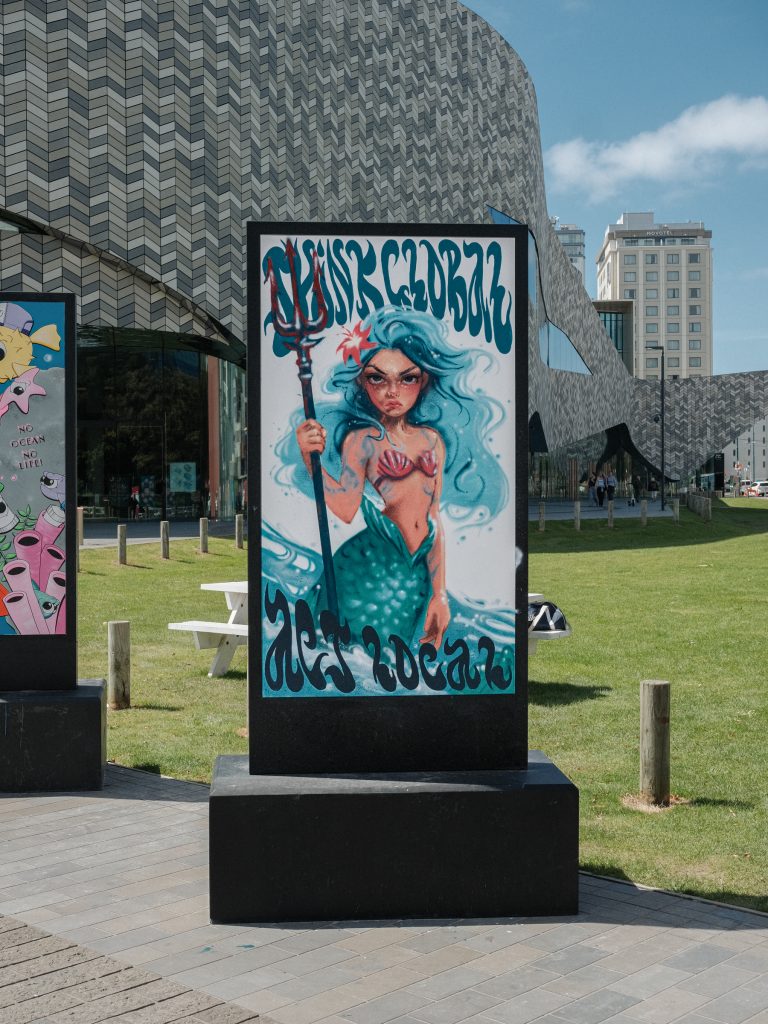
At its centre is a Mermaid guardian, beckoning the deep-sea creatures to follow her away from the bottom trawling boats.
The work is layered with subtle references to Lyttelton’s history, hidden as visual easter eggs throughout the composition. The mermaid herself is inspired by Lyttelton local and tattoo artist McChesney-Kelly Adams, grounding this otherworldly narrative firmly within the community.
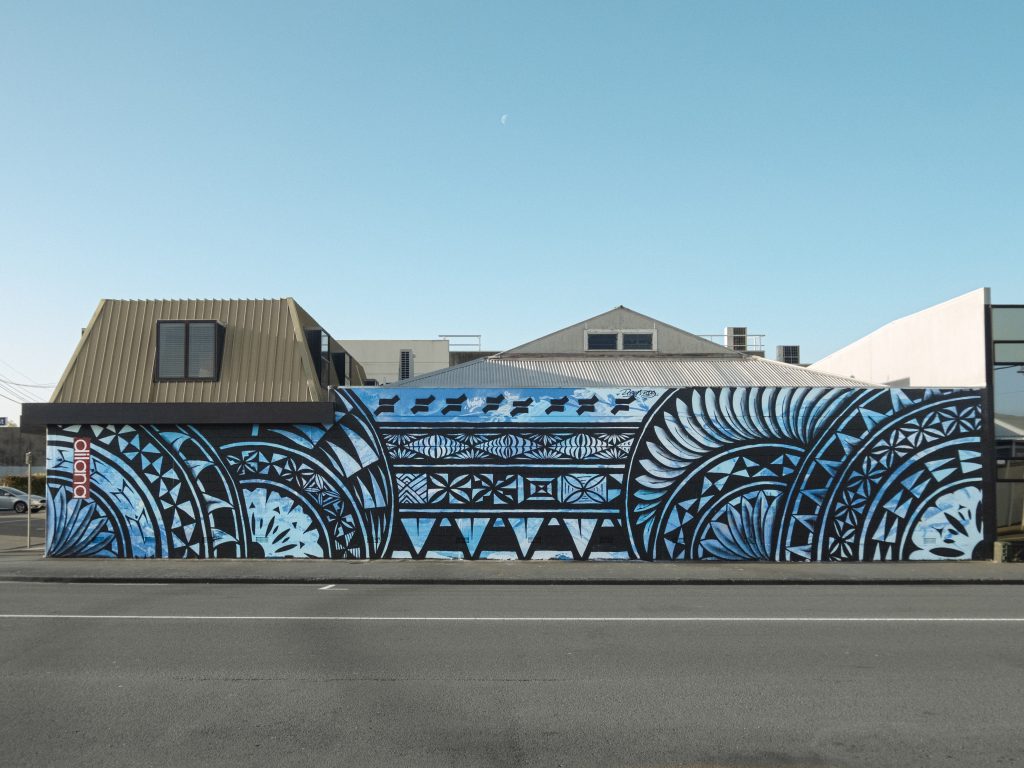
Moana
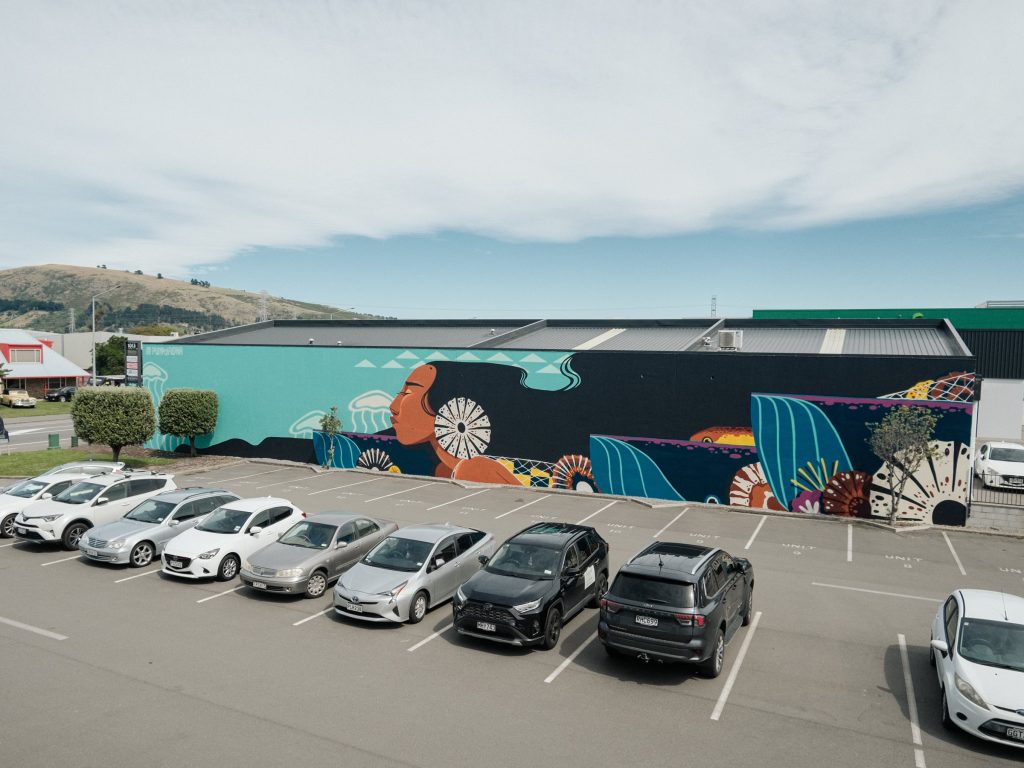
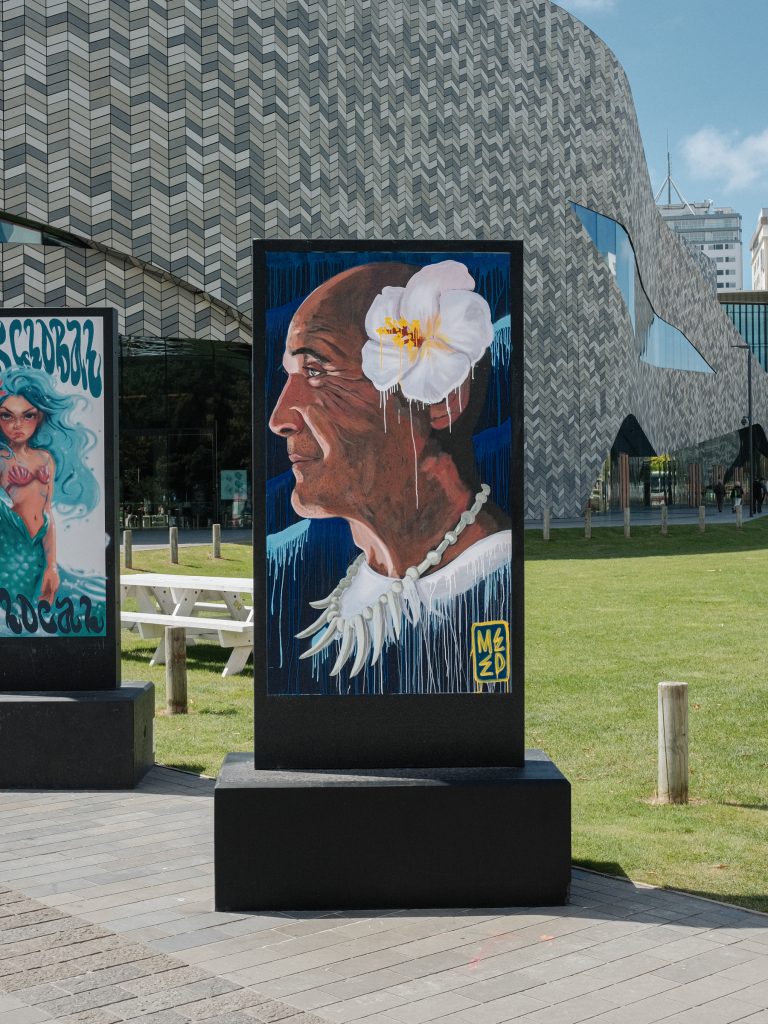
This mural honours the ocean as a living source of life, culture, and connection. The flowing Tatatau patterns echo tides and currents, while the bold forms symbolise guardianship and responsibility. It reminds us that what we do on land affects the sea, calling on the community to protect, respect, and care for our oceans for future generations.
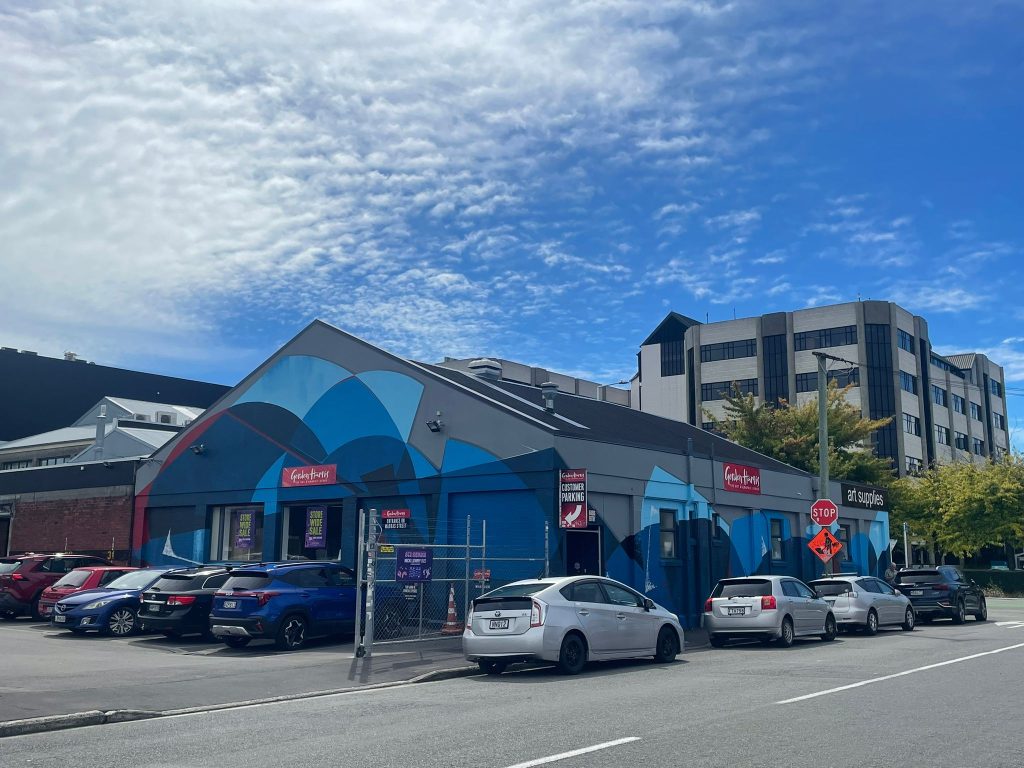
Disturbanseas
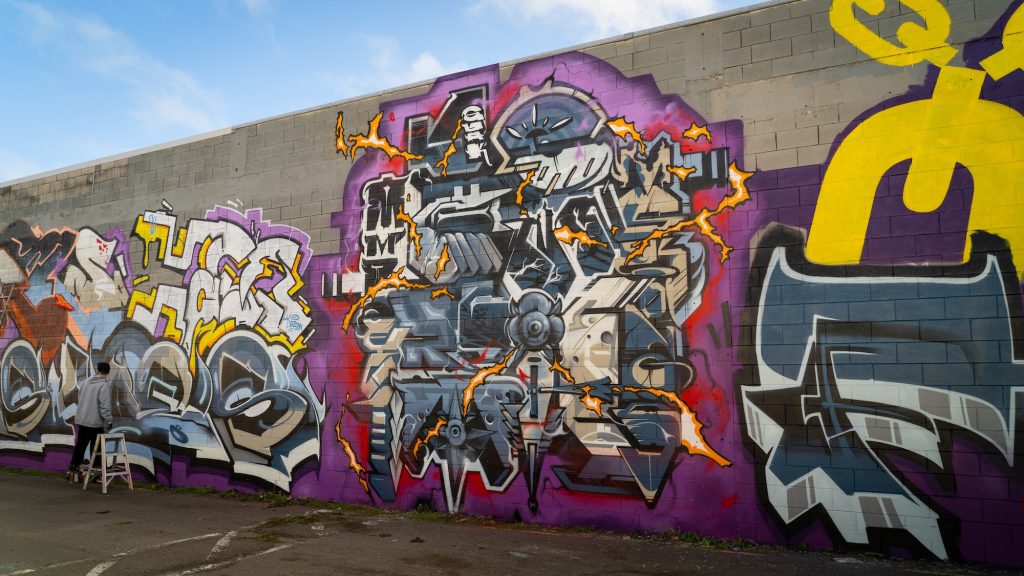
This mural depicts a conflict in our seas that we may not be able to see for ourselves. A disturbance created by the steady rise in temperature due to the effects of climate change. Sparks of rage in turbulent waters. I have used heavily contrasting colours to create a violent sense of movement that communicates the idea that we are now being bullied by the very thing that once nurtured us and provided all we needed
Te Pou Rāhui
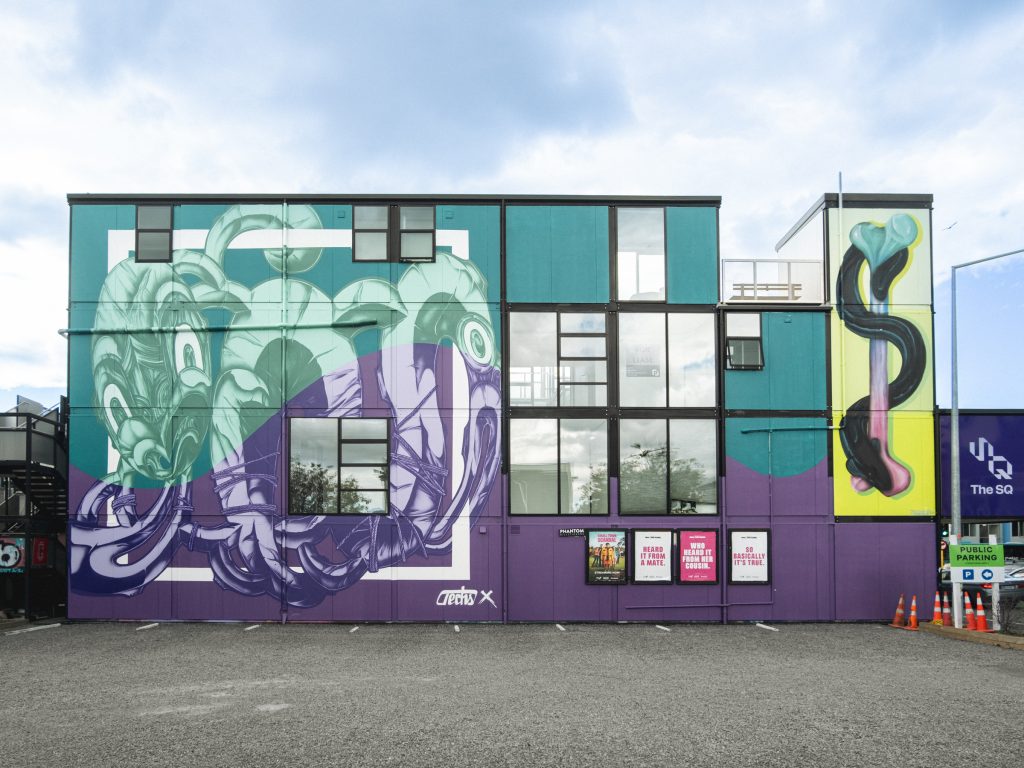
This mural speaks to the conservation and protection of kai moana across Te Waipounamu through the enduring cultural practice of rāhui. Rāhui is a traditional system used by our ancestors to allow ecosystems time to rest, recover, and regenerate, ensuring balance across the skies, land, and sea.
At the centre of the design is a whakairo representing a taniwha. This taniwha stands as a guardian of the surrounding shores and waters, signalling to local iwi and communities
that a rāhui has been placed. It embodies both protection and responsibility, reminding us that the health of our moana is closely tied to how we choose to care for it. The whakairo is positioned within the rise and fall of the tides, reflecting the natural rhythms of the ocean and the ongoing relationship between people and place. This movement acknowledges that rāhui is not permanent restriction, but a thoughtful pause that allows life to replenish before access is restored. A white square element sits within the composition as a symbol of looking beyond conventional thinking. It represents the need for future-focused approaches that honour ancestral knowledge while empowering the next generations with the understanding and responsibility to carry these systems forward. Together, these elements reinforce the idea that protection, access, and knowledge must exist alongside one another to safeguard our home, our land, and our sea.
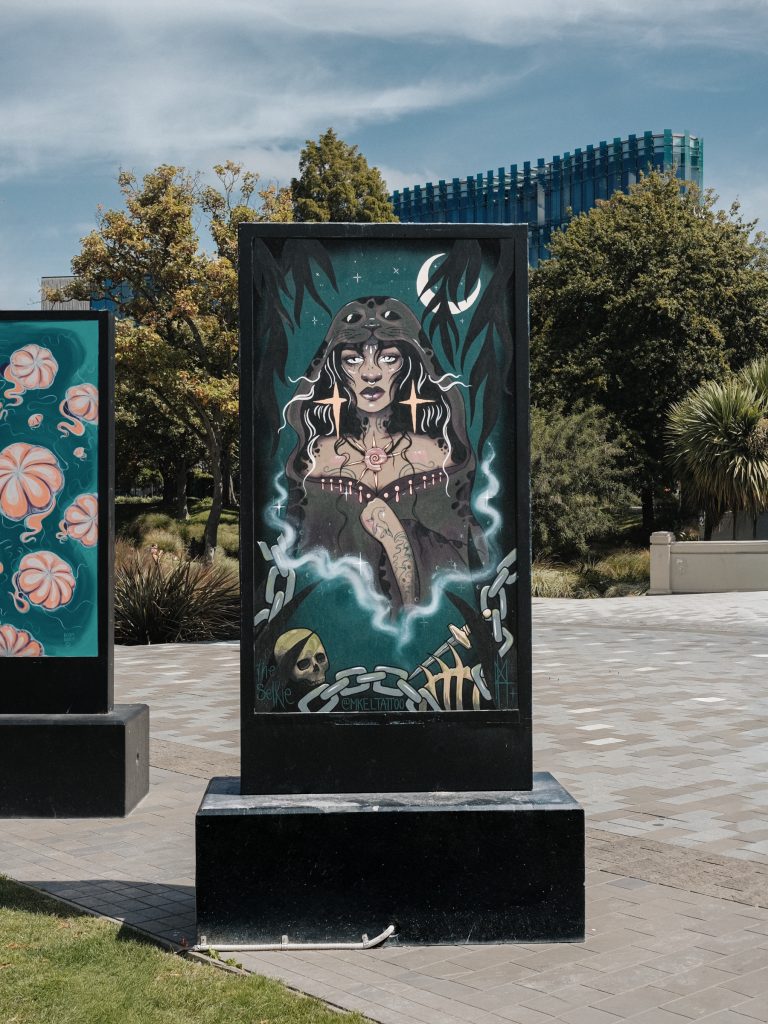
McChesney-Kelly Adams, also known as Chez, is a multidisciplinary visual artist and tattooer from Lyttelton, New Zealand. With a background in fine art, her creative practice spans drawing, painting, murals, and tattooing, each medium reflecting her detailed, expressive style.
Her visual art often explores themes of nature, animals, and portraiture, blending elements of realism, illustration, and fantasy. Her pieces are known for their delicate and highly detailed execution, imaginative depth, and subtle whimsy.
Her latest small mural, created on a lightbox, is inspired by the mythical creature Selkie. Selkie are Scottish, Irish, and Norse folklore, they are shapeshifters who transform between seal and human form by shedding her skin
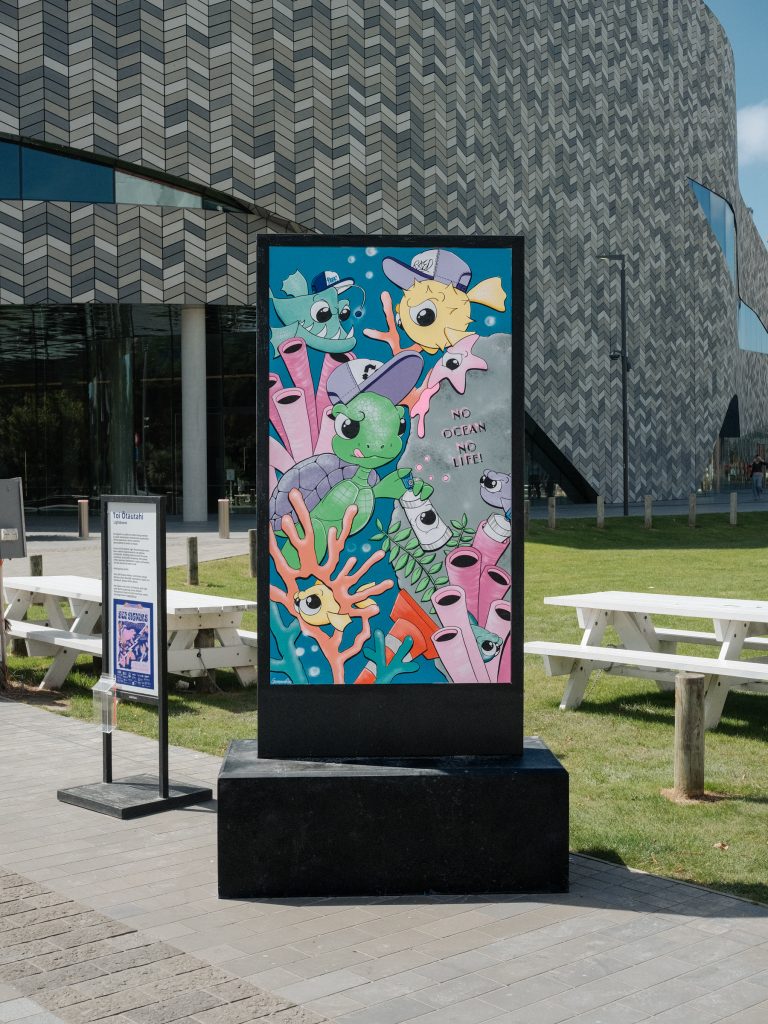
No Ocean No Life by Gemma Rae
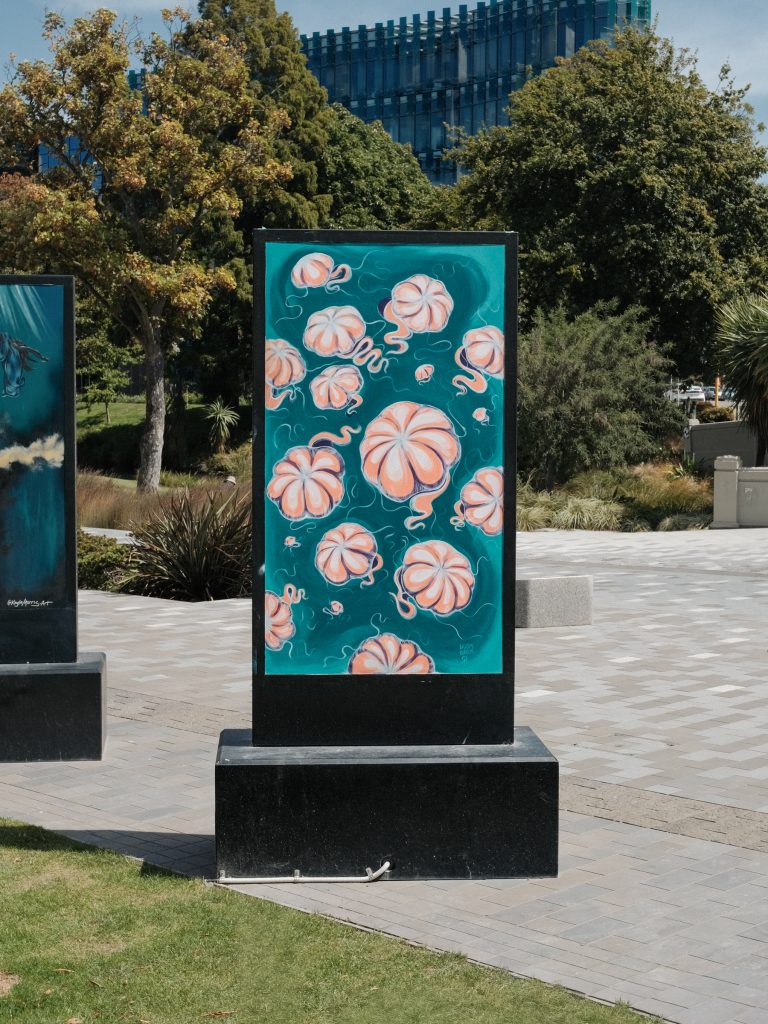
Jellyfish are more than drifting beauty. They help regulate ocean ecosystems by consuming plankton and algae, recycling nutrients back into the sea, and providing shelter for juvenile fish. Some species even produce compounds which break down oil pollutants. They are also the staple food source for sea turtles. Jellyfish blooms are not a miracle, but a warning – often signaling stressed, unbalanced oceans. We admire their beauty but ignore their role and responsibility in the ecosystem, reflecting a worldview shaped by western colonisation that taught us to see nature as simply decoration rather than a living system.
Think Global Act Local
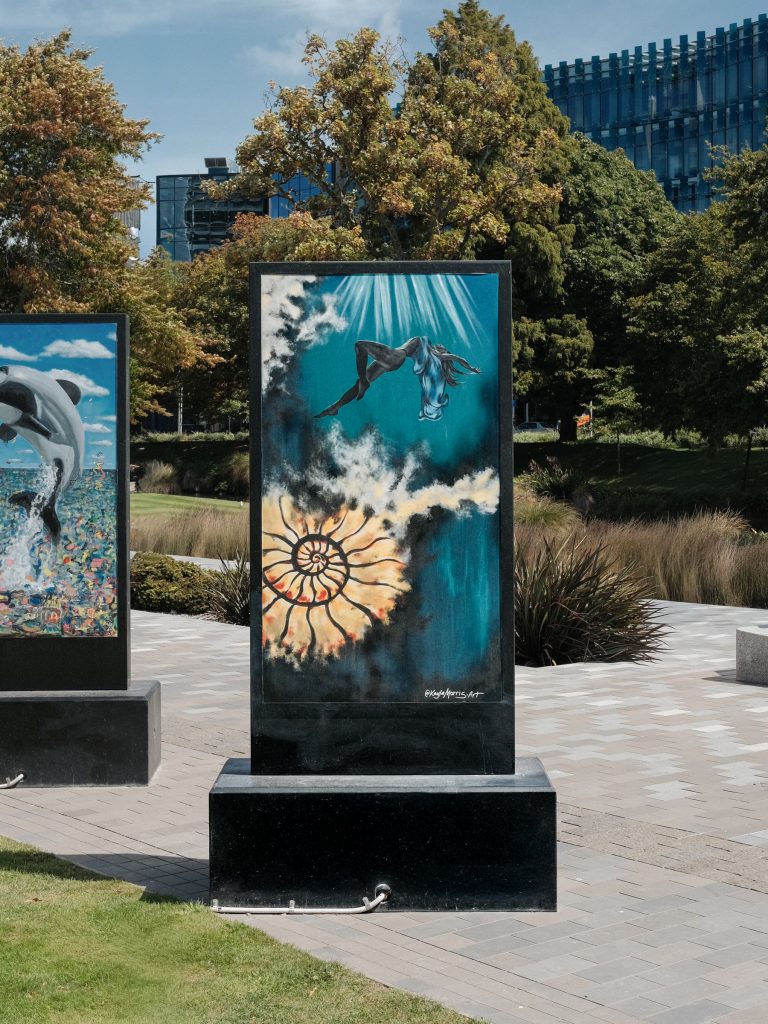
‘Synergy’ reflects a quiet harmony between humanity and the ocean, surrender, connection, and our shared breath with the sea.
The Fibonacci pattern echoes the sacred order found throughout nature, reminding us how it moves with intention and balance.
A concept ~ in aligning ourselves with the oceans wellbeing and natures rhythm, a deeper power emerges ~ one that protects, heals, and allows life to flow.
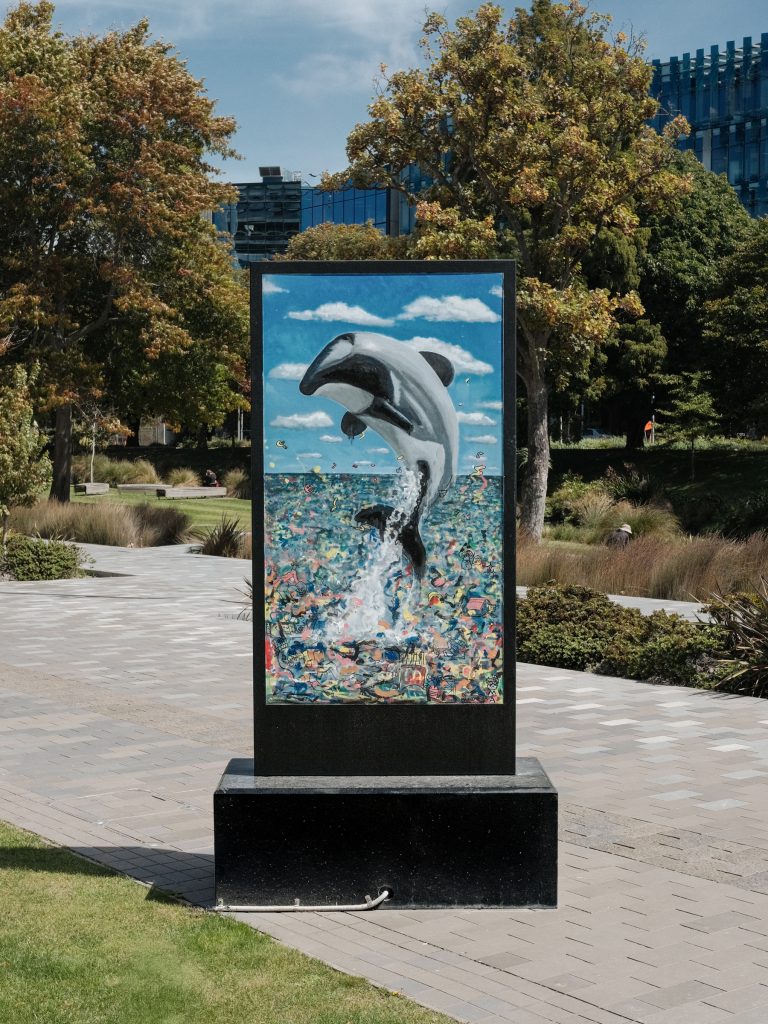
Masked Artist chose to paint the Māui dolphin, one of the rarest marine mammals in the world. Small, playful, and found only off the west coast of Aotearoa, it’s the smallest species of dolphin on the planet, living right here in our own backyard.
Yet despite its beauty and uniqueness, the Māui dolphin is now critically endangered.
There are believed to be only 55 individuals over the age of one remaining.
The mural highlights an uncomfortable truth: while extinction can feel like something distant or historical, human activity continues to push species to the brink. The Māui dolphin faces threats including:
• Marine pollution and plastics
• Boat strikes
• Oil, gas, and mineral exploration
• Toxoplasmosis
• Fishing bycatch (set nets and trawling)
The work invites reflection on responsibility and restraint. Protecting the Māui dolphin does not require extraordinary innovation, it requires change. It asks communities to slow down, reduce harm, and reconsider everyday practices that impact the ocean.
Sometimes, saving a species is less about doing more — and more about choosing to do less.
Dr. Bobby Hung is a graffiti writer based in Tamaki Makaurau and known under the name Berst. He has painted graffiti for 20 years and involved in a range of community centred projects with youth and visual arts education in the tertiary sector. His painting practice involves the production of large scale aerosol artworks in public spaces through the exploration of letter based works.
In parallel to art making, Berst holds a PhD in Education from the University of Auckland and has intersecting practices with illustration, oral history and documentation, and curation. His list of accolades includes a second-place award at the international Ono’ U graffiti competition in Tahiti, Guinness World Record for the World’s longest graffiti scroll completed in Dubai, and a recipient of the Unitec- Taipei Artist Village residency programme.
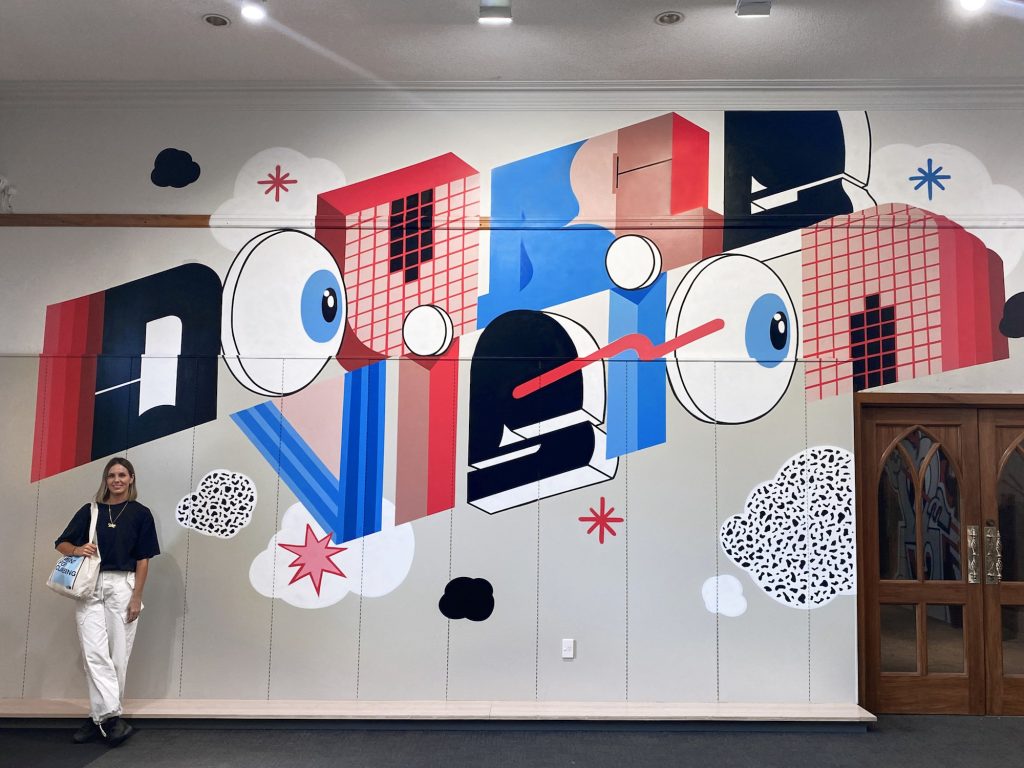
Holly is an artist and designer whose work is primarily based around words and letterforms and combines the influences of graffiti, typography, design and sign writing. She enjoys the conceptual, problem-solving aspect of design and takes a similar approach to the walls she paints — the message is key, words are weapons and public walls are an opportunity to speak to people. While most of her work involves painting on walls, Holly loves exploring a variety of media and is interested in finding ways to make her work light up wherever possible.
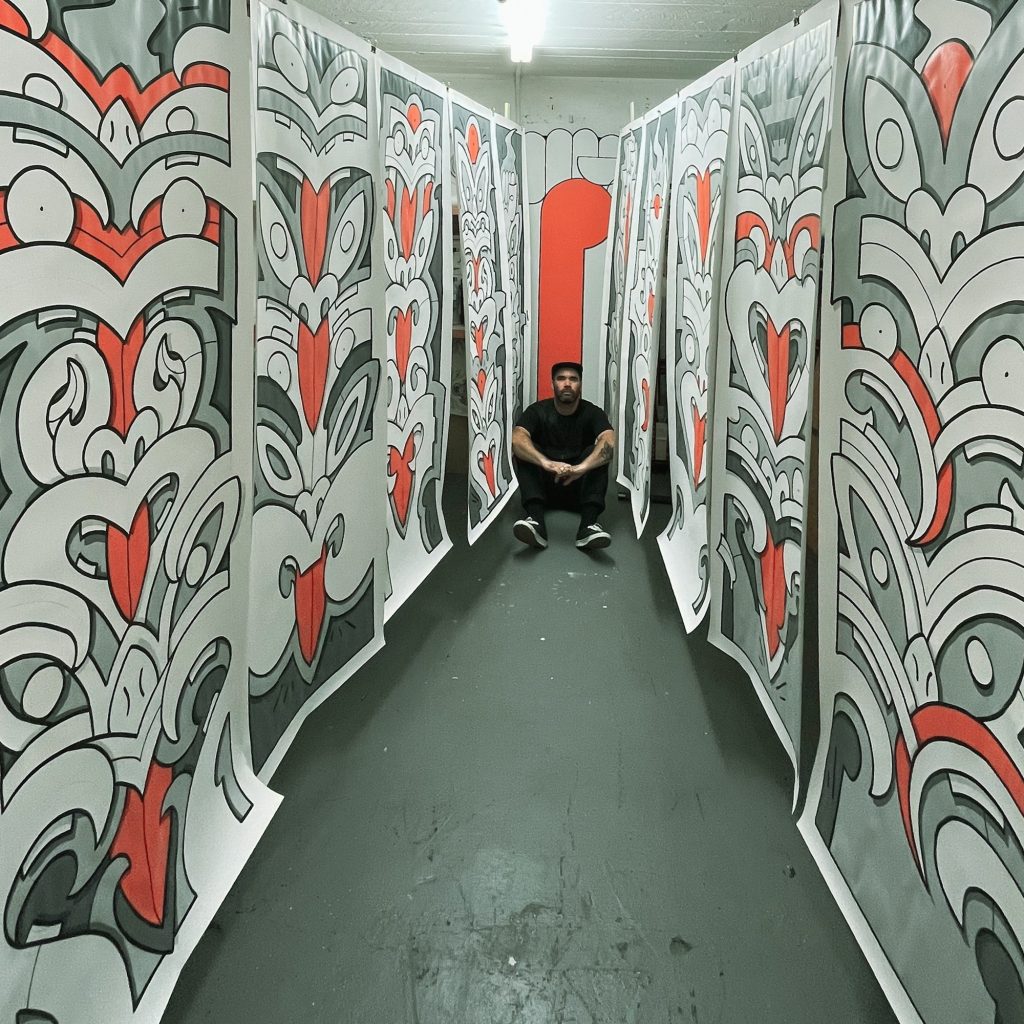
Kairau ‘Haser’ Bradley is a Māori artist of Ngāpuhi descent, born and raised in the western suburbs of Auckland, Aotearoa (New Zealand).
After decades of dedication to the urban canvases and 10 years navigating the corporate space of the design world, Haser now occupies a full time art practice. He is one of a handful of artists at the forefront of the graffiti and street art scene in New Zealand; with over 20 years of contribution to the graffiti community, representing and exhibiting at international events throughout Australasia, North America, Asia, Middle East, Europe, and the UK.
Haser’s work reflects a lifetime of exploring the limits and boundaries of the alphabet in the context of graffiti. These studies have manifested into a post graffiti narrative which illustrates a story of his fear of love, a place for his people and hope for a better world. Similar to Haser’s works on the urban canvas, his studio works carry the same signature, saturated colour palette and are represented by bold, graffiti inspired motifs.
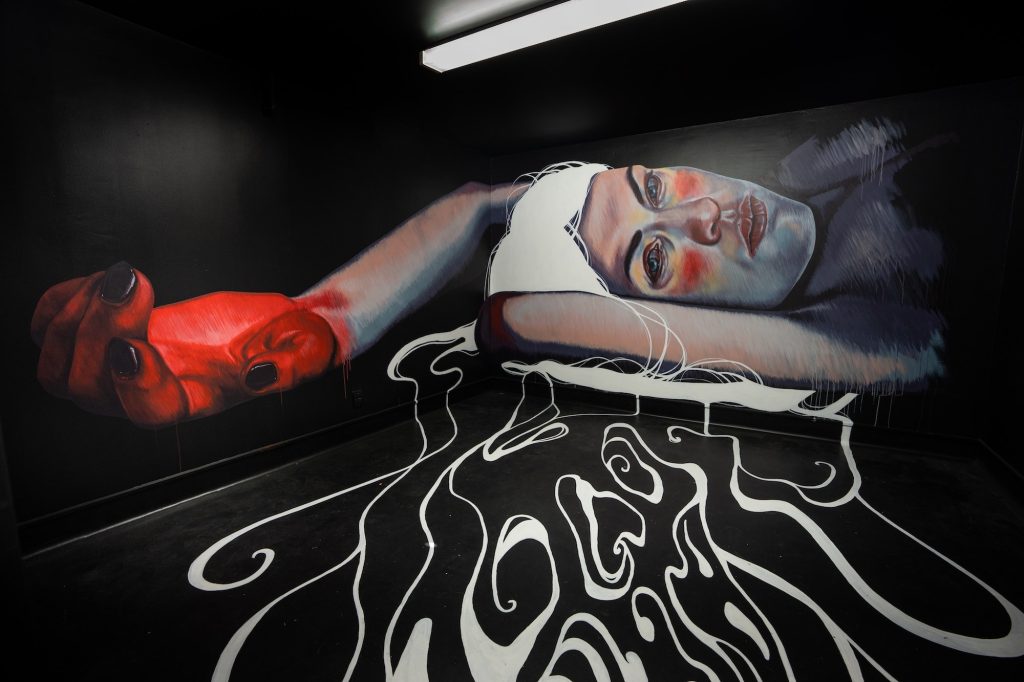
Jessie Rawcliffe is a multi-disciplinary artist, designer and muralist based in Ōtautahi
Christchurch, New Zealand. Her paintings are often recognisable for their figurative realism that differs from traditional portraiture as it aims to shift the power dynamic from the viewer to the subject. She pairs contrary visual elements, styles and themes – such as positive and negative space, detail and obscurity, permanence and impermanence to emphasise an ephemeral moment or emotion.
1 . Mural painted in the Canterbury Museum as part of SHIFT Urban Art Takeover.
2023
2 . ‘Kaitiaki’
Mural on a section of the Berlin Wall on display in Ōtautahi Christchurch, NZ
2021
3. Part of ‘Gazer’ series for The Little Street Art Festival.
2023
4. Mural commission for New Zealand Opera.
2021
A versatile creative force, Nick Lowry is an Ōtautahi artist and designer. Lowry’s creative practice extends from graffiti and muralism to abstraction, collage, set design and art production. He has worked on numerous award-winning productions, including feature-length films, music videos and stage plays. His work constantly evolves, referencing and exploring the context of its creation, a result of the artist’s insatiable curiosity and exploratory drive. Maintaining a range of outlets, from public space to the studio, ensures Lowry’s work is never static, the various threads feeding into each other while also diverging into fresh paths. His mural works can be found in Ōtautahi, across Aotearoa and overseas, while his film work extends to wide audiences.
JacobYikes , born Jacob Ryan, is a multi-disciplinary artist based out of Ōtautahi.
He has an extensive background in graffiti and large scale murals and is a member of the prolific ‘Dtr crew’. Jacob has headlined numerous mural festivals throughout Aotearoa including Rise, Spectrum, Paradox, From the ground up, South sea spray and Shift. His large scale works often depict elements of dark humour and characters derived from the artist’s subconscious often placed in surreal-like landscapes. Over the years Jacob’s style has gradually evolved away from his recognisable cartoonish style to a more in depth realistic approach yet still recognisable as ‘Yikes’
As well as having a vast outdoor presence , Jacob also has a studio practice and has exhibited works in solo and group shows for roughly 2 decades
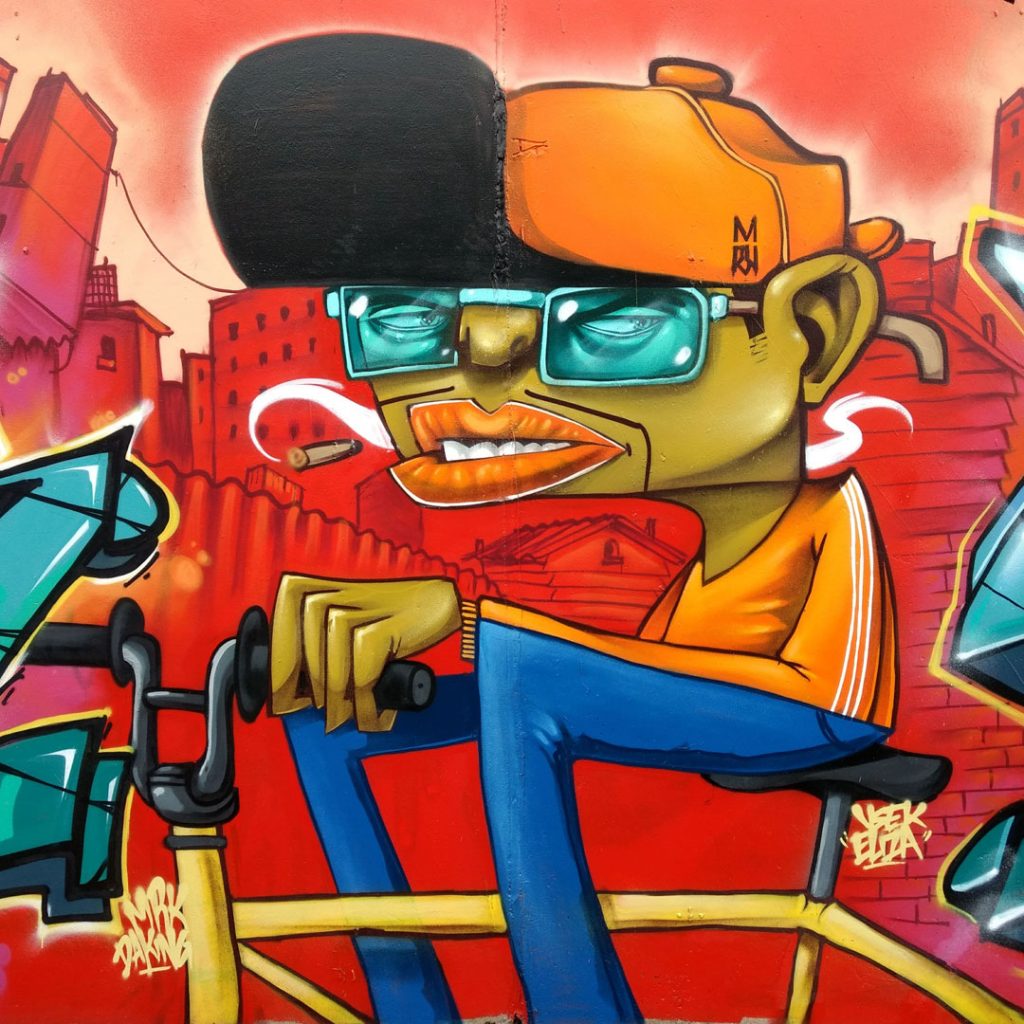
Daniel Carrasco a.k.a Ysek7, was born in Chillán, Chile, and currently resides in Christchurch, New Zealand. At 37 years old, he has built a life defined by creativity and art. From a young age, he showed a passion for design and urban expression, starting to tag at just 14 years old. At 18, he created his first graffiti, embarking on a journey he has continued to this day.
Daniel is a member of the Chilean crew MRK (Mala Raza Krew) and the New Zealand crew FSA (Full Steam Ahead). With a background in graphic design and artistic illustration, he has successfully blended his academic training with his love for street art. He currently works for a painting company, where his experience and skills find a place in both the professional and creative realms. His career reflects a life dedicated to art and the constant pursuit of new forms of visual expression.
Combining impressive technical ability and an undeniable work ethic, Otautahi-based artist Dcypher has established himself as one of Aotearoa’s most respected urban artists. With a career spanning several decades and crossing continents, Dcypher’s versatility and adaptability has seen his work spread across various platforms, from commercial murals to illustration, design and education.
Dcypher has worked with global brands, including Converse, Heineken, Chevrolet and the Los Angeles Dodgers, and painted for festivals and projects in locations including Los Angeles, Las Vegas, Miami’s iconic Wynwood Walls, Dubai, Brazil, and throughout Aotearoa. After a decade living in Los Angeles, where he became part of the legendary CBS crew, Dcypher returned home in 2019, quickly cementing his reputation with landmark murals under his XL Street Murals company, collaborative productions with his DTR crewmates, and the establishment of Dcypher Apparel, an urban clothing line inspired by his love of skate culture.
While Dcypher has constantly expanded his creative practice throughout his career, his crisp, bold and clean illustrative style remains evident, the influence of graffiti and the urban environment clear, an acknowledgment and celebration of his artistic roots.
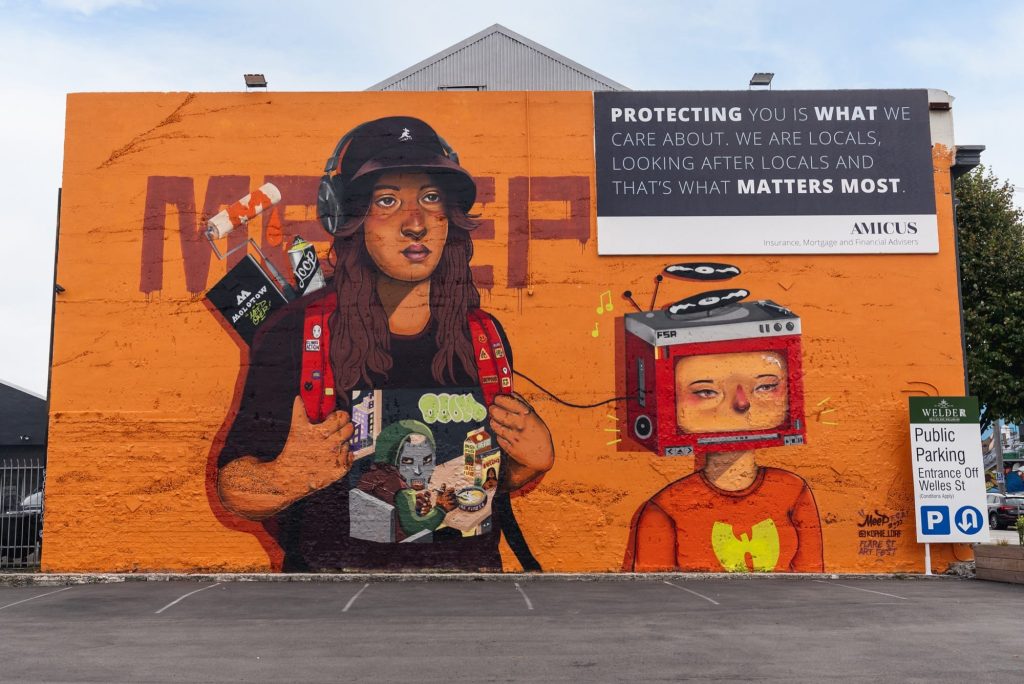
Meep (Kophie Hulsbosch) is a Ōtautahi-based artist whose work spreads across a diverse range of fields, including graphic design, illustration, painting, graffiti and clothing design. This output is heavily influenced by hip hop culture, low-brow art and the issue of sustainability.
A central intention in her work is the disruption of the status quo, reflected in her graffiti and her clothing brand Future Apparel which is a response to the mass production.
Proudly hailing from the small Eastern Bay of Plenty community of Kawerau, New Zealand, Owen Dippie grew up surrounded by individuals with strong cultural identities. This naturally drove his chosen subject matter from a young age, transpiring in his highly-praised portrait works.
Owen has been painting his large-scale realist portraiture on the streets of New Zealand and New York for over a decade. During Owen’s 2015 trip to New York, he held his first solo exhibition in the United States, and was honoured to have one of his works named as Best Mural 2015 by The Huffington Post, along with producing his first work in downtown Los Angeles. Owen and Erin his wife and manager have owned a successful Mount Maunganui art gallery followed by their gallery on the iconic K’RD, Auckland City. Owen then embarked on extensive overseas travel with the majority based in New York where he completed many large scale murals including his iconic “Art of storytelling” Biggie and Hitchcock mural and collaborative work with Al Diaz of SAMO honouring the late Jean Michel Basquiat.
Exploring the universal language of art. He endeavours to leave his mark on the world, rather than just exist in it.
Meep (Kophie Hulsbosch) is a Christchurch-based artist whose work spreads across a diverse range of fields, including graphic design, illustration, painting, graffiti and clothing design. This output is heavily influenced by hip hop culture, low-brow art and the issue of sustainability. A central intention in her work is the disruption of the status quo, reflected in her graffiti and her clothing brand Future Apparel which is a response to the mass production.
Koryu is a self-taught international artist who has been freelancing full-time since 2019. Koryu is originally from Japan and he has been exposed to street culture for a long time. He also worked in Japan as a professional Graphic Designer for a while. Since 2018 He has traveled to several countries to touch the new culture and trained in street art in Melbourne. These backgrounds lay the foundation for his artistry.
He provides mural work for community spaces, paints the canvas work, and performs as a live painter in the event. His paintings of animals, people, and plants are very delicate, full of originality and vibrant colors.
Realism Artist from the Manawatu specializing in Street Art, Tattoo, and Illustration.
His work predominantly centers around Animal-Realism, and in recent years has begun focusing on Animal portraiture and story-telling.
He created the ‘Stray Stories’ series, painting large scale portraits of stray cats who found their forever-homes in interesting places.
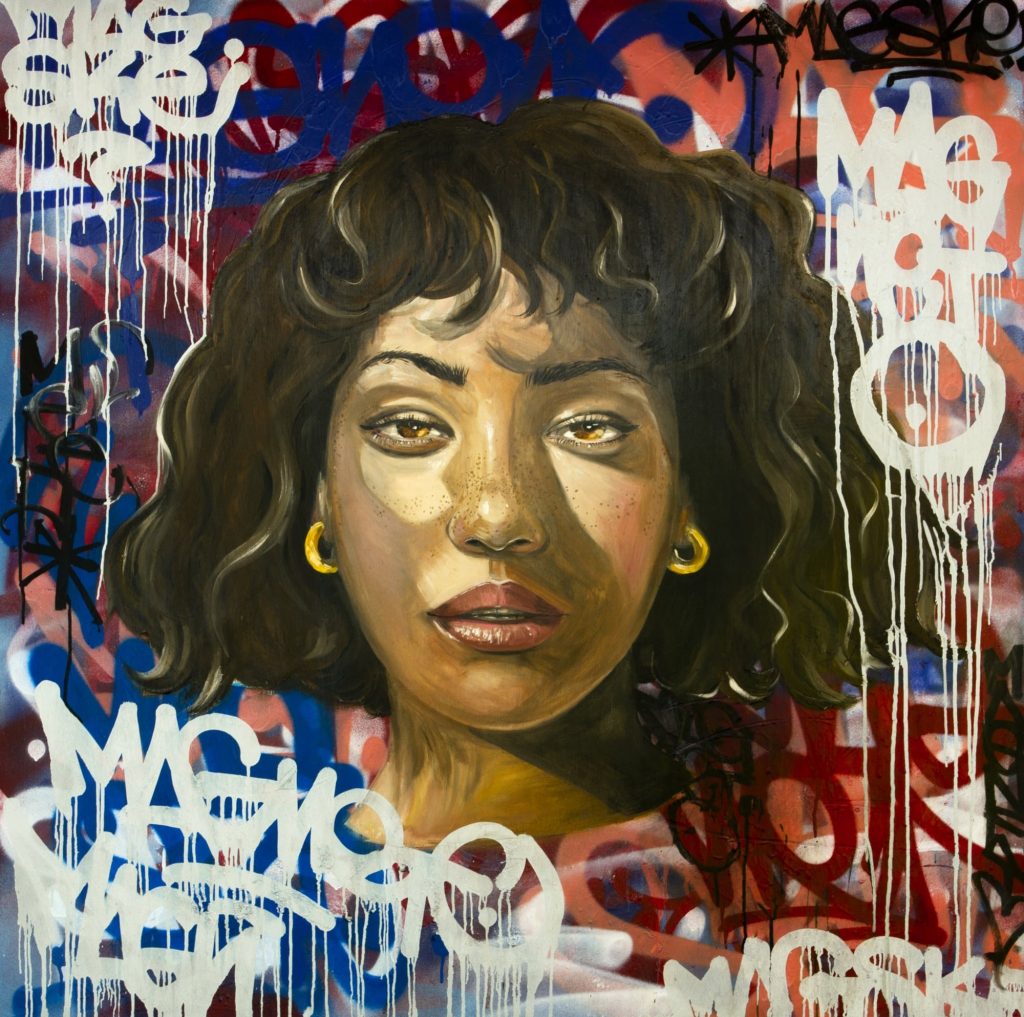
Though most of his murals reside in the north island, in 2021 he painted a collaborative mural with Sean Duffell in the heart of Blenheim, raising awareness for the Marlborough Falcon Conservation Trust (MFCT).
The mural featured a portrait of a critically injured Karearea (NZ Falcon) called Kowhai, who’s story of rescue, revival and release epitomized the importance of the charity’s hard work.
Wongi’s interest in graffiti developed at a young age and for over 25 years he has watched the art form grow from virtual non-existence to a blossoming, pervasive creative influence across New Zealand.
Wongi has played a major role in the transformation of graffiti art in Otautahi Christchurch and is synonymous with the rise of street art muralism in the city. From media coverage to featuring in documentaries and various publications as well as festivals, his murals have served to transform hundreds of walls throughout the city and beyond.
Born in 1982, Elliot Francis Stewart is the third youngest of nine children and grew up in the Eastern Auckland suburb of Pakuranga. He spent his childhood engrossed in comic books and creating elaborately rendered drawings of galleon’s and scenes of war.
In 1996 his family relocated to the inner city neighbourhood of Grey Lynn and he attended the now defunct Auckland Metropolitan College, an alternative school where he met his tight-knit crew of friends who became known as the RFC (Rat Fink Club) crew.
Initially garnering a reputation for his often offbeat cartoon-based graffiti, Elliot became part of TMD (The Most Dedicated) in 2001 and quickly established himself as the foremost talent in character based work in aerosol. Furthermore his early shows at The Gully Lounge in St.Kevin’s Arcade and Disrupt Gallery, allowed him to showcase elaborate and influential illustrative works often created on found objects in common house paint and ballpoint pen.
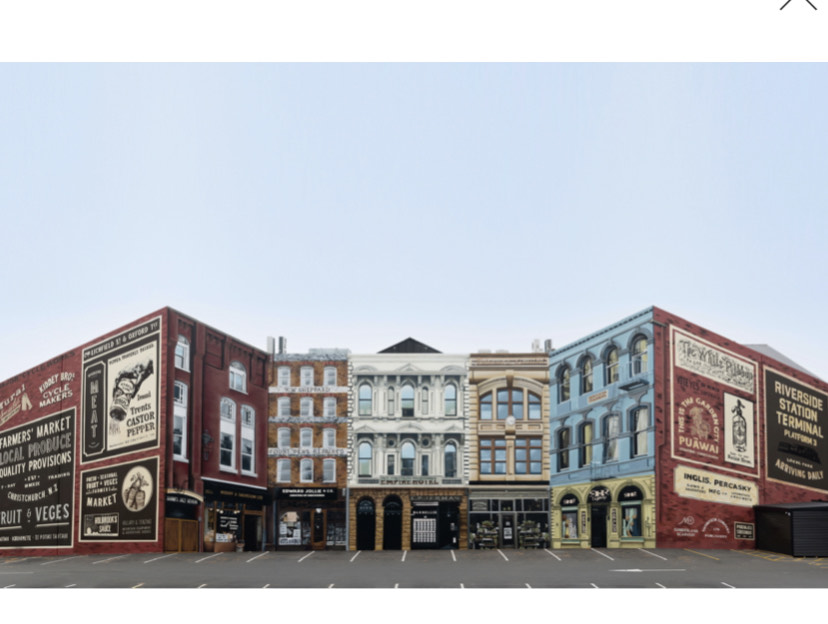
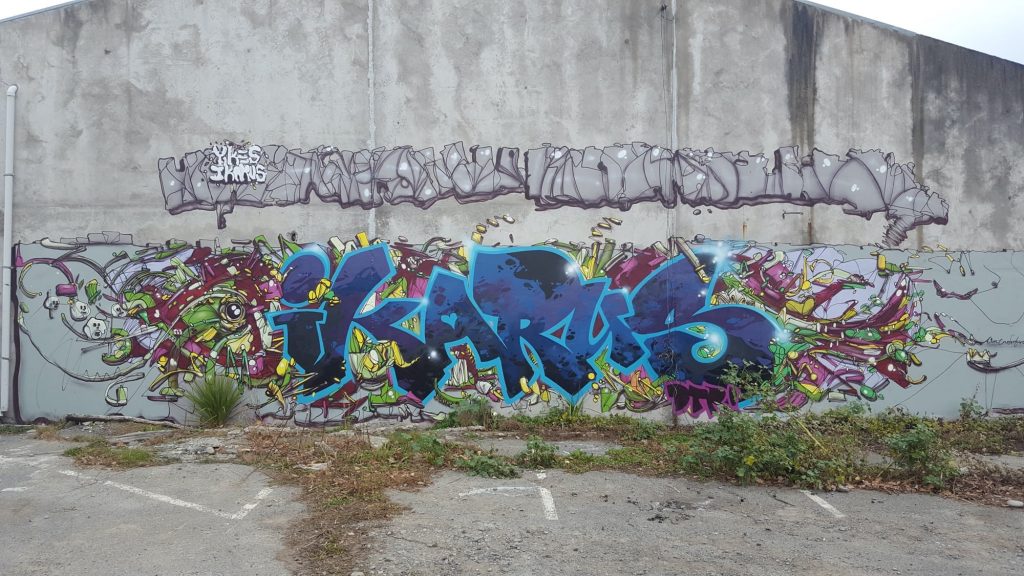
Christchurch graffiti art legend Nick “Ikarus” Tam is one of the founding members of the city’s foremost graffiti art collective the DTR Crew. Ikarus lives and breathes the genre and has accumulated an almost encyclopedic knowledge of graffiti art. This knowledge, combined with his flawless clean-line style, makes him one of the city’s most respected artists. When Ikarus is not graffiti lettering, his artistic style leans more towards installation and sculpture work, exploring the pressures of operating on the fringes of society. The empathy within Ikarus’ art is also reflected in his youth work. He was instrumental in Christchurch’s Project Legit before it lost its home in the 2011 earthquake, working to channel the artistic expression of inner-city kids—many of whom were referred to the program by the Youth Justice Department. More recently, Ikarus has played a crucial role in fine-tuning the design and, alongside the rest of the DTR Crew, painting the Riverside Market Mural. The mural itself has quickly become a widely loved Christchurch landmark.
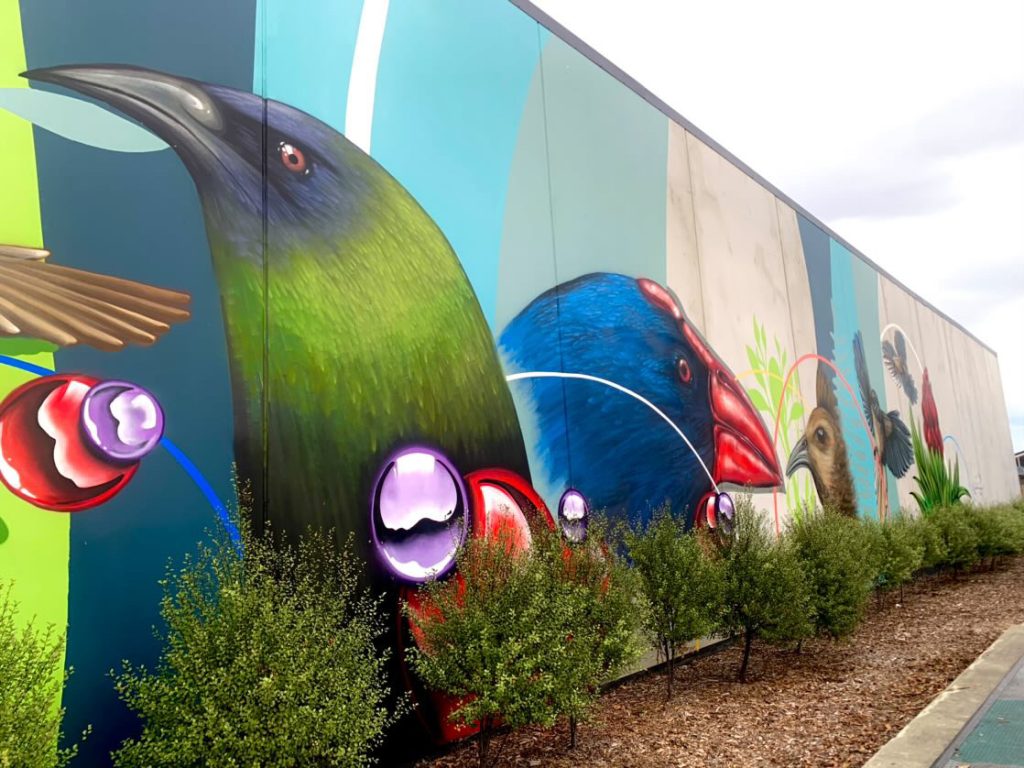
Kell Sunshine is a lettering artist, muralist, & illustrator from New Zealand, with a big love for Mother Earth
Kell’s creative style is characterised by bright fresh colour palettes and curvaceous forms, meticulously hand crafted lettering, and illustrative elements of flora and fauna. Her work often serves as a platform to promote the conservation of our natural environment.
Kell has been a feature artist in street art festivals throughout NZ and the world. She has spoken at a handful of conferences including Typism on the Gold Coast, 2018. Kell was the curator of the 2019 activation of Sea Walls – Artists for Oceans Tairāwhiti NZ, bringing 20 fresh murals to the town of Gisborne from renown international artists.
Kell does not engage in conversation before consuming coffee in the mornings but is henceforth a social creature. Things that make her happy include: Her pup, sunshine, seedlings, the sound of tropical rain, scuba diving, and the thought of being able to travel again.
Meep (Kophie Hulsbosch) is a Christchurch-based artist whose work spreads across a diverse range of fields, including graphic design, illustration, painting, graffiti and clothing design. This output is heavily influenced by hip hop culture, low-brow art and the issue of sustainability. A central intention in her work is the disruption of the status quo, reflected in her graffiti and her clothing brand Future Apparel which is a response to the mass production.
Koryu is a self-taught international artist who has been freelancing full-time since 2019. Koryu is originally from Japan and he has been exposed to street culture for a long time. He also worked in Japan as a professional Graphic Designer for a while. Since 2018 He has traveled to several countries to touch the new culture and trained in street art in Melbourne. These backgrounds lay the foundation for his artistry.
He provides mural work for community spaces, paints the canvas work, and performs as a live painter in the event. His paintings of animals, people, and plants are very delicate, full of originality and vibrant colors.
Realism Artist from the Manawatu specializing in Street Art, Tattoo, and Illustration.
His work predominantly centers around Animal-Realism, and in recent years has begun focusing on Animal portraiture and story-telling.
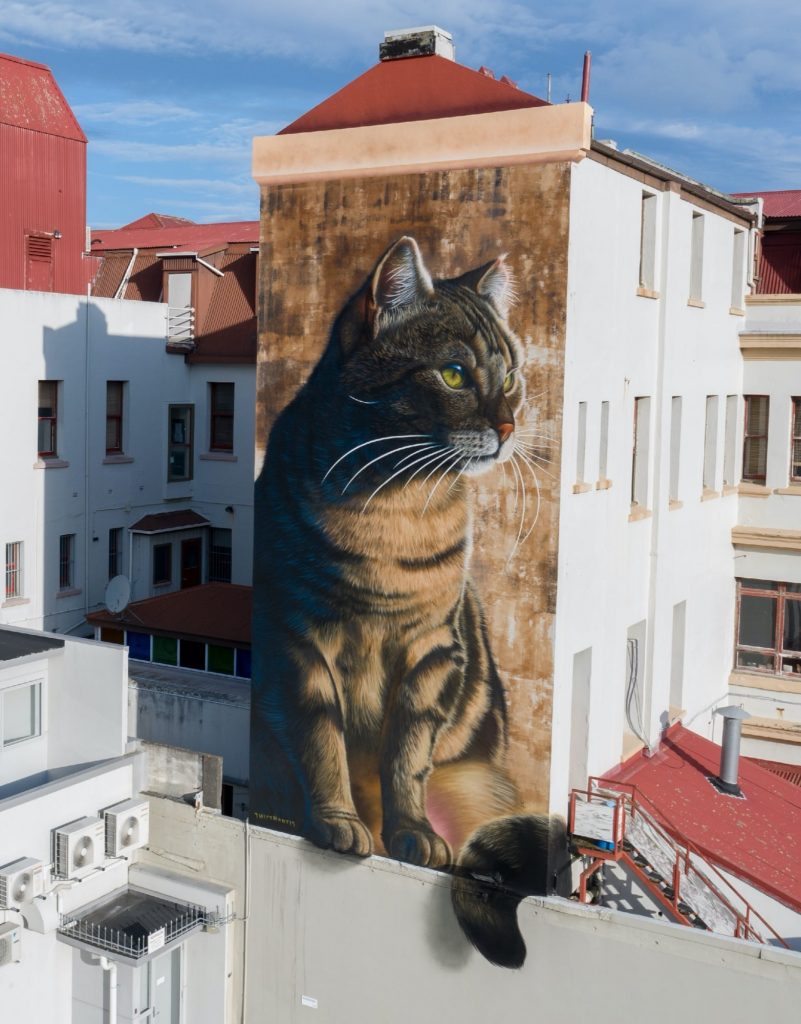
He created the ‘Stray Stories’ series, painting large scale portraits of stray cats who found their forever-homes in interesting places.
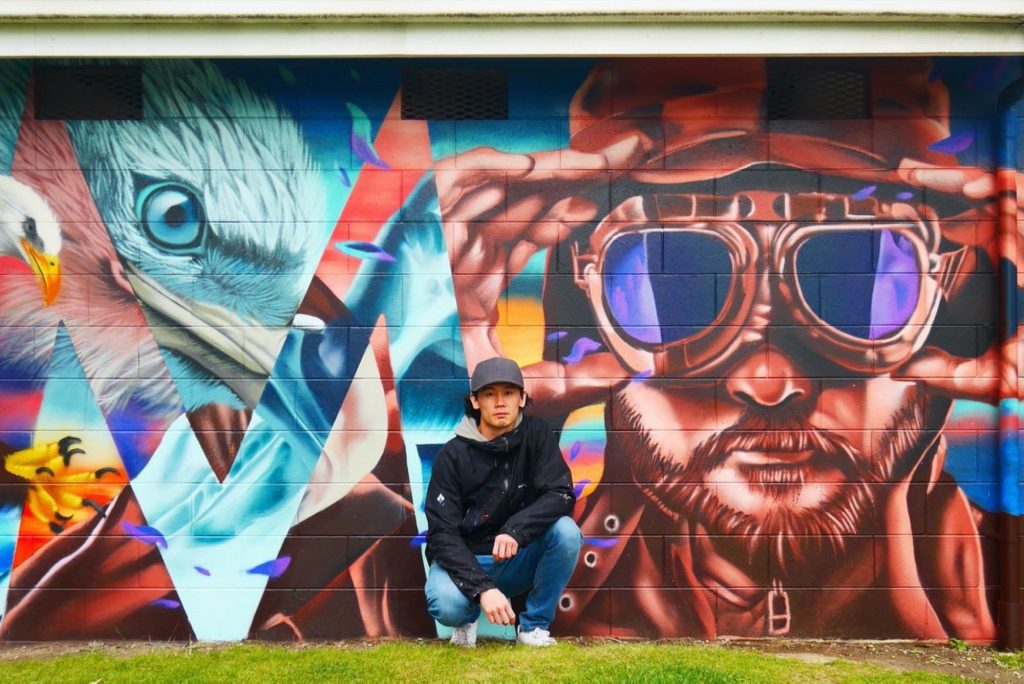
Though most of his murals reside in the north island, in 2021 he painted a collaborative mural with Sean Duffell in the heart of Blenheim, raising awareness for the Marlborough Falcon Conservation Trust (MFCT).
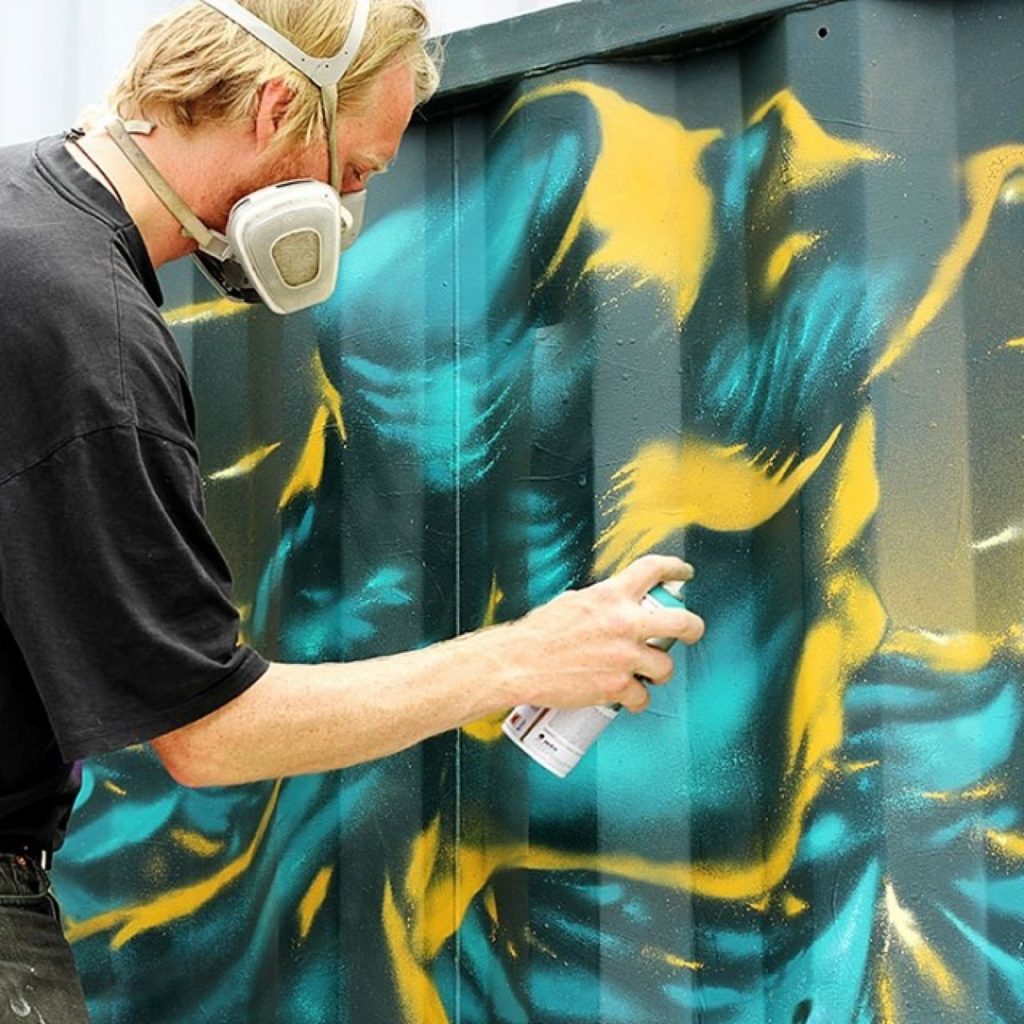
The mural featured a portrait of a critically injured Karearea (NZ Falcon) called Kowhai, who’s story of rescue, revival and release epitomized the importance of the charity’s hard work.
Wongi’s interest in graffiti developed at a young age and for over 25 years he has watched the art form grow from virtual non-existence to a blossoming, pervasive creative influence across New Zealand.
Wongi has played a major role in the transformation of graffiti art in Otautahi Christchurch and is synonymous with the rise of street art muralism in the city. From media coverage to featuring in documentaries and various publications as well as festivals, his murals have served to transform hundreds of walls throughout the city and beyond.